Iris Hayes · 13 November 2026
Modern Equipment Innovations Help Prevent Gluten Transfer Between Products in Shared Grain Milling Operations
Grain processors have long managed the challenge of shared equipment lines where gluten-free and conventional grains move through the same infrastructure, and tech upgrades now provide stronger barriers against crossover contamination. Facilities handle multiple product types daily while automated detection tools, enhanced cleaning cycles, and real-time monitoring systems reduce the chance that trace gluten proteins reach unintended batches.
Detection Systems Spot Contaminants Early
Optical sorters equipped with near-infrared spectroscopy identify gluten-containing kernels as they enter intake points, and these machines divert suspect material before it reaches milling stages. Data from facilities using such equipment shows rejection rates that keep gluten levels below regulatory thresholds in finished gluten-free outputs. Processors integrate these sorters with conveyor controls that adjust flow automatically when anomalies appear.
Researchers at the University of Manitoba documented how spectroscopy units combined with machine learning models achieved over 98 percent accuracy in distinguishing wheat from oats and other gluten-free grains during high-speed operations. That performance holds steady across varying moisture levels and kernel sizes common in commercial runs.
Automated Cleaning Protocols Replace Manual Methods
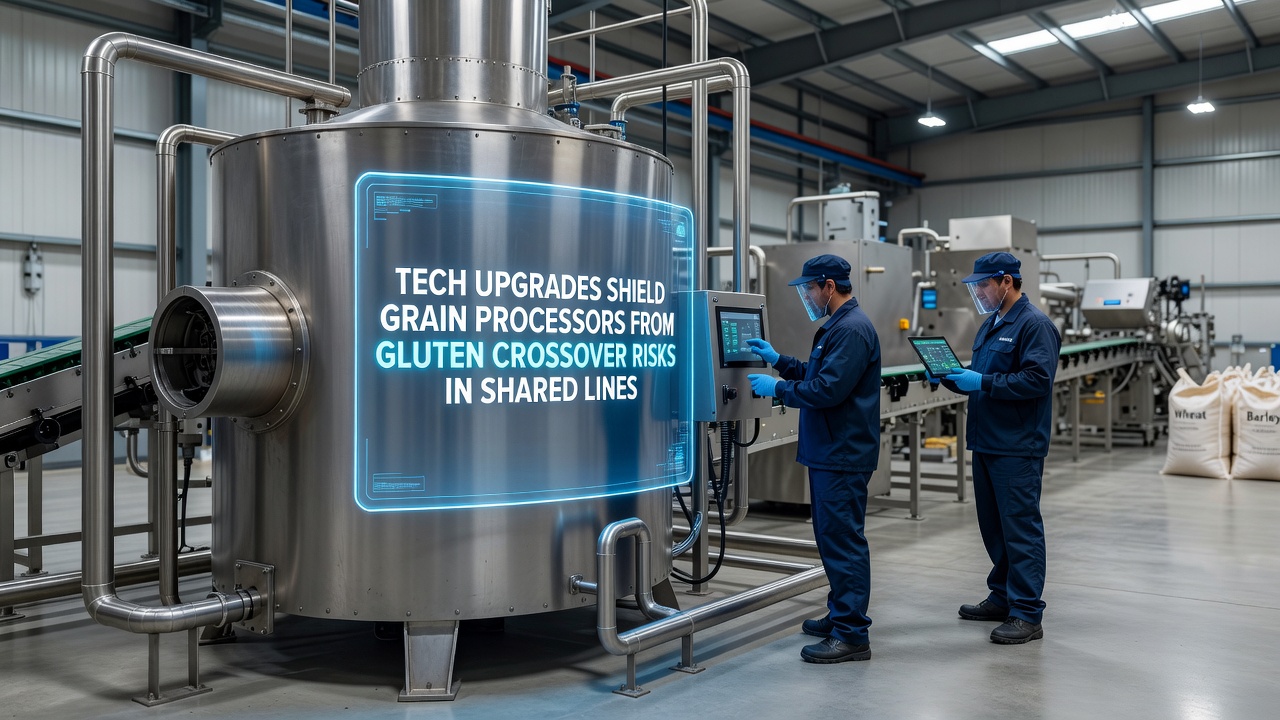
Closed-loop cleaning-in-place systems now cycle through lines with pressurized water, detergents, and air purges that reach every internal surface, and sensors confirm residue removal before the next production run begins. These setups cut downtime compared with older manual scrubbing while delivering consistent results that satisfy third-party audits. Plants running shared lines for gluten-free flours and standard wheat products report fewer validation failures after installing the upgraded CIP units.
Industry reports note that facilities adopting these protocols in late 2025 saw measurable drops in positive gluten tests during routine sampling. The systems log every cycle parameter, creating traceable records that regulators and buyers review during inspections.
Integration with Production Scheduling
Software platforms coordinate cleaning windows with incoming grain schedules so shared lines switch between gluten-free and conventional products only after verified sanitation, and this coordination minimizes idle time while maintaining separation standards. Operators receive alerts on tablets when sensors detect incomplete cleaning, prompting immediate corrective action before processing resumes.
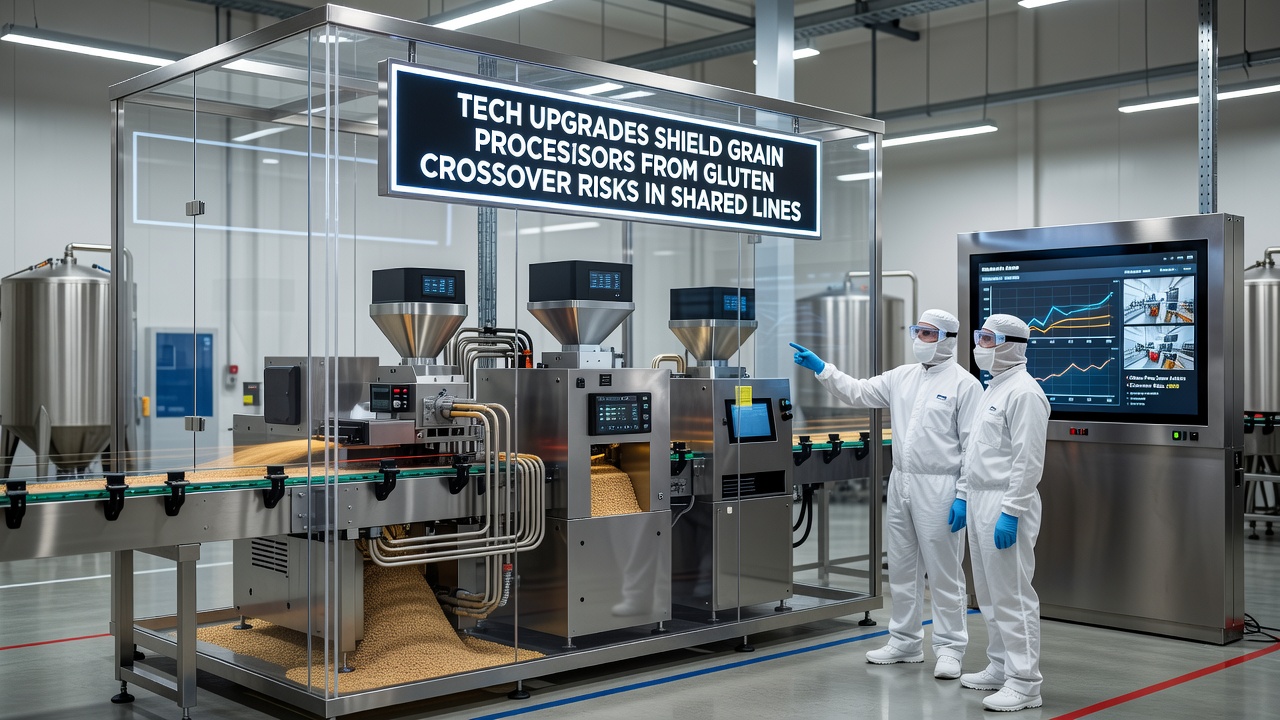
By November 2026 several North American operations had linked these scheduling tools to supplier databases, allowing advance planning around grain lots flagged for higher gluten risk. The approach keeps throughput high without compromising the integrity of certified gluten-free runs.
Regulatory Alignment and Testing Advances
Health Canada updated its gluten testing guidance in 2025 to recognize data from inline sensors alongside traditional lab methods, and processors now submit combined datasets that demonstrate ongoing control. Similar updates from the European Food Safety Authority encourage continuous monitoring rather than end-product checks alone. Facilities that adopted the new tech early found it easier to meet both sets of expectations during cross-border shipments.
Portable rapid-test kits complement the fixed sensors by providing on-the-spot verification at critical control points, and workers use them to spot-check equipment surfaces after cleaning cycles. Results appear within minutes and feed directly into digital logs that support traceability requirements.
Case Examples from Operating Plants
One Midwest facility processing both barley malt and gluten-free oats installed a full suite of NIR sorters plus upgraded CIP hardware in early 2025, after which gluten detection events in finished oat flour dropped to zero across twelve consecutive months of testing. Another operation in the Pacific Northwest paired scheduling software with air-based residue removal and achieved certification renewals with fewer corrective actions required.
Observers note that smaller processors gain access to these tools through modular retrofits rather than full line replacements, and leasing arrangements spread capital costs while delivering immediate risk reduction. Data collected across these sites shows consistent performance regardless of facility scale.
Conclusion
Tech upgrades centered on detection, automated cleaning, and integrated scheduling now give grain processors reliable methods to manage gluten crossover on shared lines. As more plants adopt these systems, the industry continues to build records that support both regulatory compliance and customer confidence in product separation. Ongoing refinements in sensor accuracy and data connectivity point toward further gains in the coming years.