Amir Krause · 4 September 2026
Oat Processing Operations Integrate Closed-Loop Water Recycling Systems While Scaling Automation for Energy Efficiency
Facilities that process oats have begun adopting closed-loop water systems to manage consumption more effectively while automation technologies reduce overall energy requirements across large-scale operations, and these changes reflect broader shifts in industrial practices documented through multiple industry assessments in recent years.
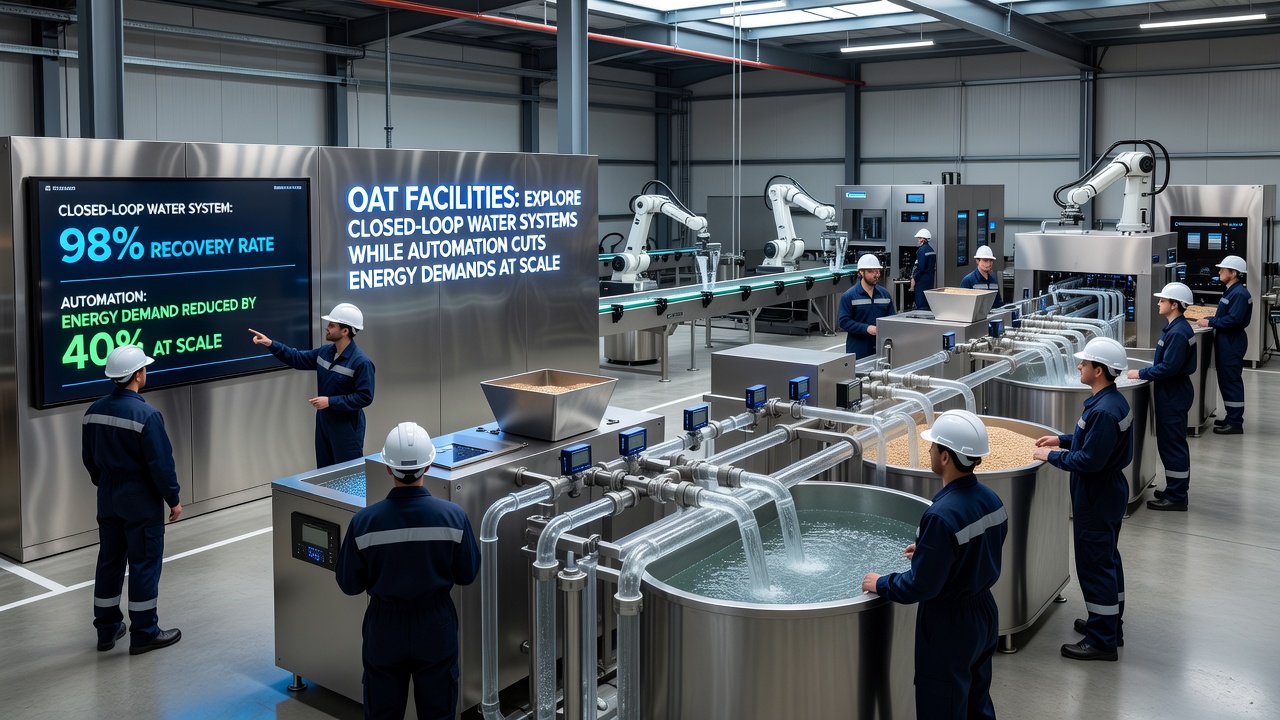
Traditional oat milling relies on substantial volumes of water for cleaning, steeping, and cooling stages, yet closed-loop configurations capture, treat, and reuse that water within the same circuit, which cuts intake from external sources and limits discharge volumes. Research from agricultural engineering departments shows recovery rates often exceed 85 percent once filtration and monitoring components reach full integration, and operators report fewer interruptions tied to water quality fluctuations.
Water Management Shifts in Oat Facilities
Closed-loop setups typically incorporate membrane filtration, ultraviolet treatment, and real-time sensors that maintain consistent water chemistry, while facilities track parameters such as pH and conductivity through centralized dashboards. One installation completed in early 2025 demonstrated annual savings equivalent to millions of gallons compared with previous open systems, and similar projects have followed in regions with variable rainfall patterns.
Data compiled by national agricultural agencies indicate that oat processors using these loops also experience lower chemical treatment costs because the recycled stream requires fewer additives after initial stabilization, and the approach aligns with regulatory expectations in both North American and European jurisdictions where discharge limits continue to tighten.
Automation Reducing Energy Loads at Scale
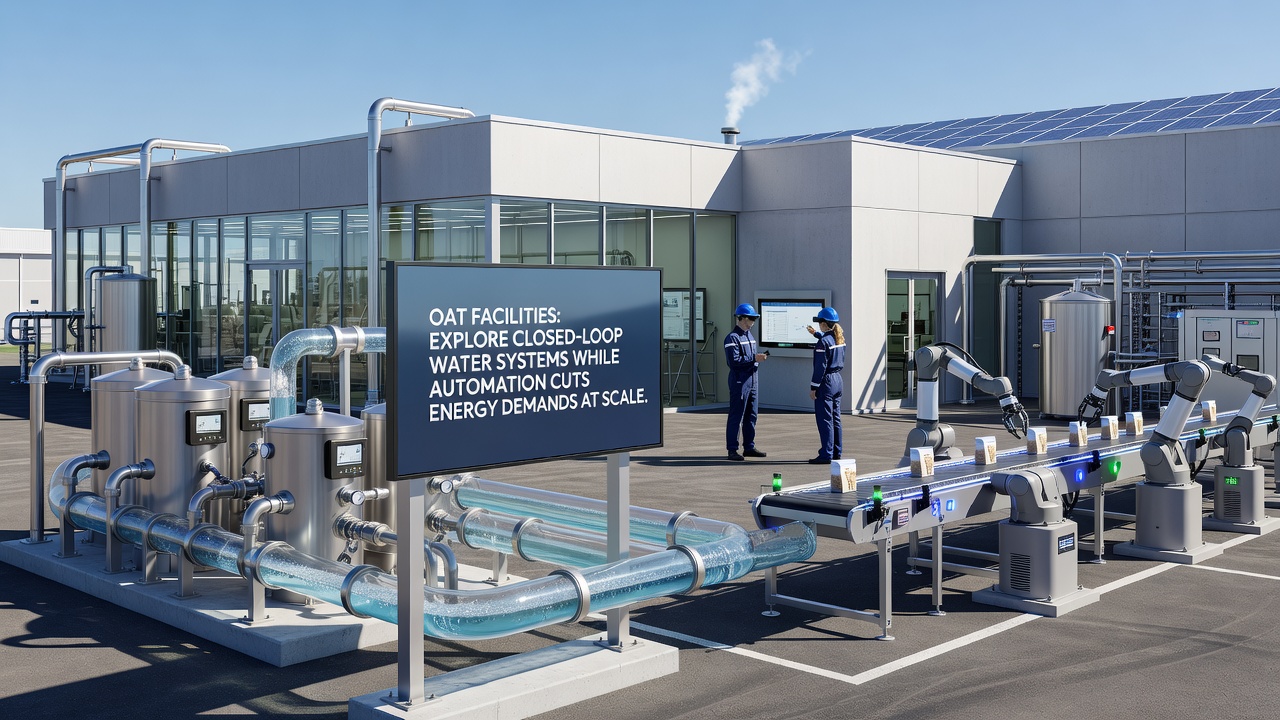
Automation platforms now coordinate motors, pumps, and drying equipment so that power draw matches real-time demand rather than running at constant maximum capacity, and variable frequency drives paired with machine learning algorithms adjust speeds based on throughput data collected every few seconds. Facilities that deployed these controls during 2024 and 2025 recorded energy reductions between 20 and 35 percent according to operational logs shared with trade associations.
September 2026 updates from international grain industry networks highlighted several oat plants where integrated automation also shortened processing cycles, which in turn lowered cumulative thermal loads on boilers and chillers, and the combined effect has allowed some sites to defer capital investments in new utility infrastructure.
Implementation Patterns Across Regions
Operators in Canada have paired closed-loop water systems with solar-assisted preheating to further trim grid electricity use, whereas facilities in Australia have emphasized predictive maintenance schedules that prevent unplanned downtime and associated energy spikes, and both approaches rely on the same underlying sensor networks and control logic. Academic studies from university research groups in these countries confirm that payback periods for the combined upgrades frequently fall within three to five years when utility incentives are factored in.
European processors, guided by directives from the European Commission environment programs, have documented comparable outcomes through standardized reporting frameworks that track both water and energy metrics, and these records show consistent year-over-year improvements once initial commissioning phases conclude.
Operational and Reporting Considerations
Staff training programs now focus on interpreting automated alerts and maintaining filtration units rather than manual valve adjustments, and facilities report fewer safety incidents tied to water handling because exposure points have been reduced. Industry reports further note that data generated by these systems supports compliance documentation required by agencies such as Australia's Department of Agriculture, which streamlines audits and reduces administrative overhead.
Maintenance schedules have shifted toward condition-based interventions, meaning components receive attention only when sensor thresholds indicate need, and this change has extended equipment lifespan while keeping energy consumption within predicted bands during peak production periods.
Conclusion
Oat processing facilities continue to refine closed-loop water configurations alongside automation layers that moderate energy demand, and the documented outcomes include measurable reductions in resource use along with improved operational consistency across multiple geographic regions. These developments rest on established engineering principles and ongoing data collection that regulatory bodies and research institutions monitor regularly.