Wendy Keller · 2 October 2026
Portable Diagnostic Tools Reshape Kernel Assessment Practices at Grain Intake Points
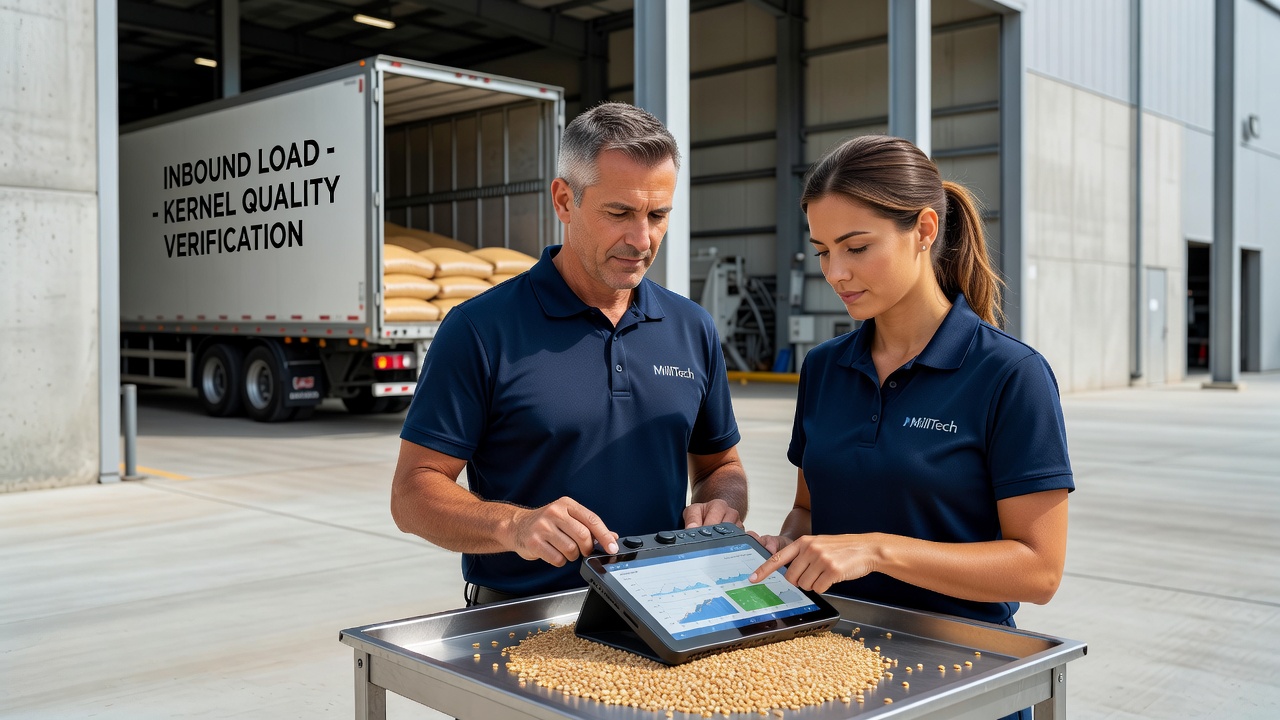
Grain mills across multiple regions began integrating portable testing kits into their inbound inspection routines during 2025, with adoption rates accelerating into October 2026 as operators sought faster verification of kernel moisture, protein content, and contaminant levels before trucks reached unloading bays. These compact devices, often based on near-infrared spectroscopy or rapid immunoassay strips, allow quality teams to sample loads at the scale house rather than waiting for laboratory results that could delay processing by hours or days.
Data from the United States Department of Agriculture shows that facilities equipped with such kits reduced average hold times for incoming wheat and corn by 35 percent in the first half of 2026, while maintaining compliance with federal grading standards. Similar patterns appear in Canadian operations where the Canadian Grain Commission documented a 28 percent drop in rejected loads after mills implemented on-site protein and mycotoxin checks.
How Portable Kits Operate at Intake
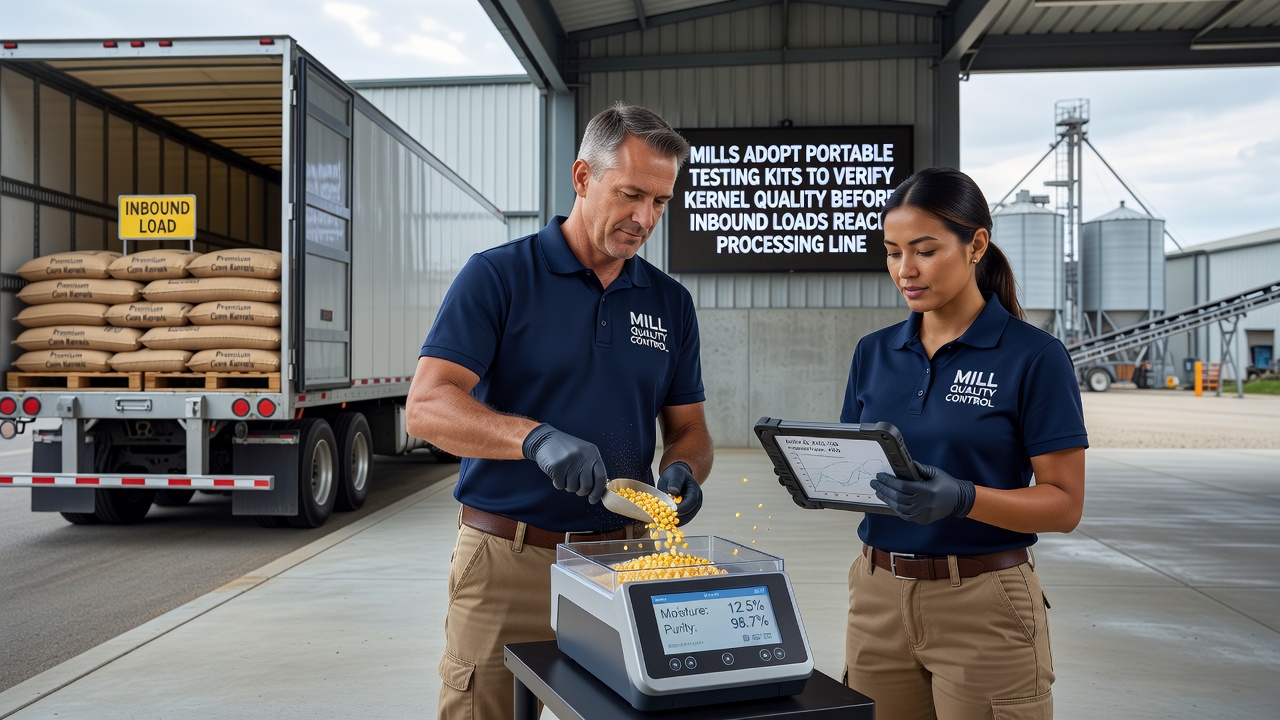
Operators collect a representative sample from each inbound trailer using standardized probes, then insert the material into a handheld scanner that delivers results for moisture, test weight, and basic damage indicators within two minutes. When thresholds for protein or falling number fall outside contract specifications, drivers receive immediate notification and the load can be redirected without entering the main processing flow. This approach contrasts with earlier reliance on central labs that required sealed samples and courier transport, a sequence that frequently created bottlenecks during peak harvest periods.
Research published by the University of Minnesota Extension indicates that portable units calibrated against official reference methods achieve 94 percent agreement on moisture readings and 91 percent on protein estimates when compared with accredited laboratory equipment. Facilities report that staff training typically takes less than four hours, after which teams can process up to 40 samples per shift without additional personnel.
Regional Implementation Patterns
European mills followed a parallel path after the European Food Safety Authority updated guidance on rapid screening methods in late 2025. Operations in France and Germany integrated immunoassay kits for deoxynivalenol detection directly at intake scales, cutting laboratory submissions by half according to industry association tallies. Australian grain handlers adopted similar NIR-based units at several inland receival sites, citing reduced demurrage costs when export shipments avoided last-minute rejections at port terminals.
One study released by Agriculture and Agri-Food Canada tracked twelve prairie elevators over two crop years and found that portable testing reduced average inbound dwell time from 47 minutes to 19 minutes per truck. The same report noted that mills using the kits identified 12 percent more loads with elevated ergot levels than facilities depending solely on visual inspection.
Integration with Existing Quality Systems
Most installations connect the portable units to existing enterprise software so that test results automatically populate load tickets and trigger alerts when parameters exceed buyer specifications. This digital linkage eliminates manual transcription errors and creates an auditable chain from field sample to final disposition. Facilities that paired the kits with automated sampling arms further reduced human contact with grain dust, aligning with updated occupational safety recommendations from the Occupational Safety and Health Administration.
Equipment suppliers report that demand for battery-powered models with Bluetooth connectivity rose sharply after several large cooperatives standardized on one platform in early 2026. Those cooperatives now share calibration libraries across sites, allowing a reading taken in Iowa to reference the same baseline used in Nebraska terminals. Observers note that such standardization helps mills meet the documentation requirements of both domestic buyers and overseas customers who specify maximum residue limits.
Challenges and Adjustments Observed
Early adopters encountered calibration drift when ambient temperatures fluctuated more than 15 degrees Celsius during a single shift, prompting manufacturers to release firmware updates that compensate for thermal effects. Some facilities added shade canopies over sampling stations, while others scheduled daily verification checks against certified reference samples. The added step adds roughly 90 seconds per shift yet maintains the accuracy levels required for contract compliance.
Cost considerations also shaped rollout speed. Entry-level immunoassay kits for mycotoxins range from $8,000 to $12,000 per unit, while full-spectrum NIR scanners start near $25,000. Cooperatives that formed purchasing groups secured volume discounts of 15 to 20 percent, according to trade reports from the National Grain and Feed Association. Smaller independent mills often began with single-parameter moisture meters before expanding to multi-analyte models once savings from avoided rejections became evident.
Conclusion
By October 2026 the shift toward portable kernel testing had moved from pilot projects to standard operating procedure at many commercial mills. The combination of immediate results, reduced laboratory dependency, and seamless data capture continues to influence how inbound grain is evaluated and routed. Facilities that completed integration report consistent improvements in throughput metrics while preserving compliance with both domestic grading rules and international buyer specifications.