Iris Hayes · 16 October 2026
Trade Policy Shifts Prompt Specialty Malt Producers to Explore Alternative Barley Sourcing Routes
Specialty malt producers have begun adjusting their supply chains in response to evolving trade policies that have altered traditional barley import patterns, and these adjustments have gained momentum through October 2026 as new tariff structures take effect across multiple regions. Industry observers note that producers who once relied heavily on specific export markets now evaluate options from Canada, Australia, and Eastern Europe to maintain consistent access to high-quality two-row and six-row barley varieties required for craft brewing and distilling applications.
Policy Changes Reshape Import Dynamics
Recent adjustments to tariff schedules in key markets have increased costs for barley sourced from certain origins, which has prompted maltsters to review contracts and explore diversified procurement strategies. Data from the US Department of Agriculture shows that barley import volumes from primary suppliers declined by measurable percentages during the third quarter of 2026, while shipments from alternative origins recorded corresponding increases. Producers report that these shifts stem from bilateral agreements and retaliatory measures that have modified duty rates on agricultural commodities including malting barley.
Those monitoring the sector point out that specialty malt operations face particular pressure because they require barley with precise protein levels, germination rates, and varietal characteristics that not every growing region can supply in volume. Companies have therefore initiated trials with new suppliers while maintaining quality specifications that meet the standards of downstream customers in the brewing and distilling industries.
Alternative Sourcing Routes Gain Traction
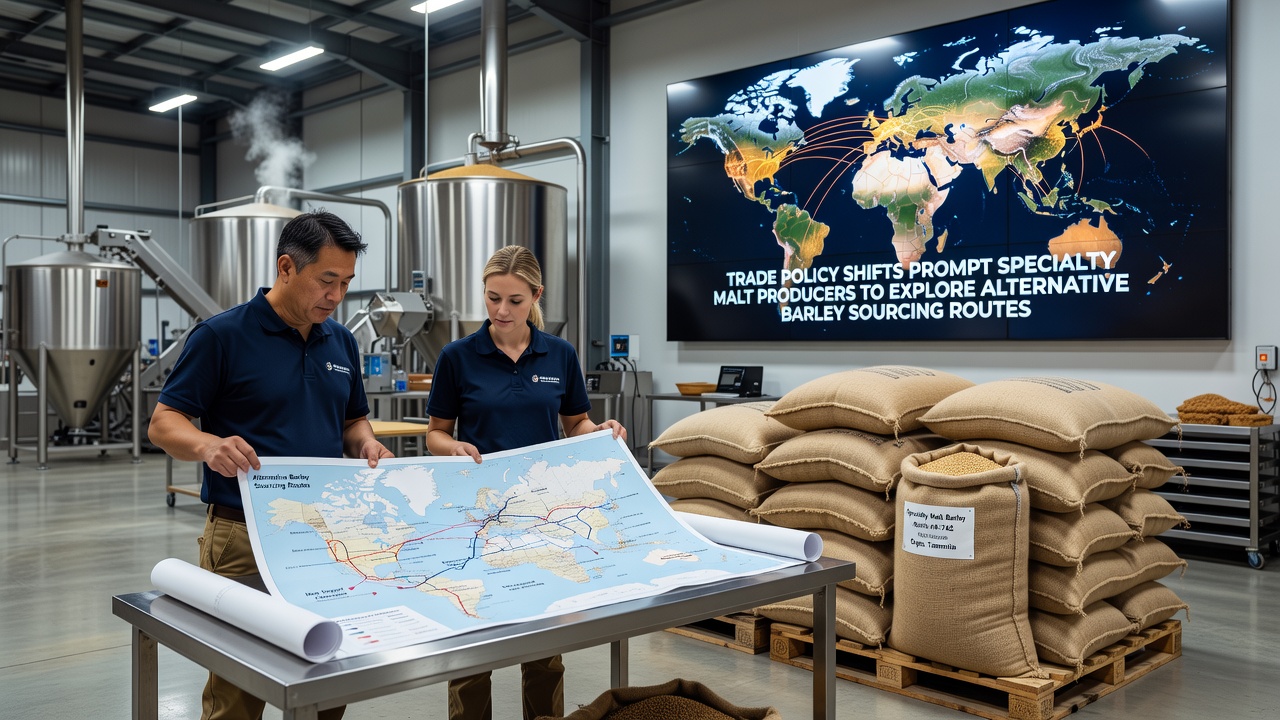
Producers have turned attention toward Canadian prairie provinces and Australian growing regions where barley production has expanded in recent seasons, and preliminary assessments indicate these sources can meet the technical requirements for specialty malting. Logistics teams have mapped new shipping corridors that involve rail movements to Pacific ports followed by ocean transit, whereas traditional routes often relied on Atlantic or Gulf coast facilities. The European Commission has published updates on intra-EU barley movements that some maltsters are also reviewing as part of broader diversification efforts.

Contract negotiations now incorporate clauses that address potential future policy fluctuations, and risk management teams have incorporated scenario modeling into procurement planning. One mid-sized malting facility in the Pacific Northwest completed its first full-scale trial run using barley from a new supplier in September 2026, with results showing comparable extract yields and enzymatic activity to previous lots. Such trials help establish baseline performance data before larger volume commitments are made.
Quality Assurance and Logistics Considerations
Quality control protocols have been updated to include additional testing at receiving points when new barley origins enter the supply chain, and laboratories have validated methods for detecting varietal purity and moisture content under varying storage conditions. Transportation partners have adjusted schedules to accommodate longer transit times associated with some alternative routes, while cold-chain capabilities for seed barley remain under evaluation in certain corridors. Industry reports indicate that storage capacity at intermediate terminals has become a focal point for investment as sourcing patterns diversify.
Producers continue to track regulatory developments in source countries because phytosanitary requirements and maximum residue limits can differ significantly between regions. Coordination with grain inspection services helps ensure compliance before shipments depart, reducing the likelihood of delays at destination ports. Figures released by agricultural research institutions show that barley yields in several alternative growing areas have remained stable despite variable weather patterns recorded during the 2025-2026 season.
Conclusion
Specialty malt producers have responded to trade policy shifts by systematically evaluating and implementing alternative barley sourcing routes, and these efforts have produced measurable changes in supply chain configurations by October 2026. Continued monitoring of policy developments and supplier performance will determine how extensively these new routes become integrated into standard operations across the sector.